
← Back to the Homeowner Resource Library
Behind the tile
What Is Behind a Waterproof Tile Shower?
A finished shower shows you the tile. The construction underneath manages the water.
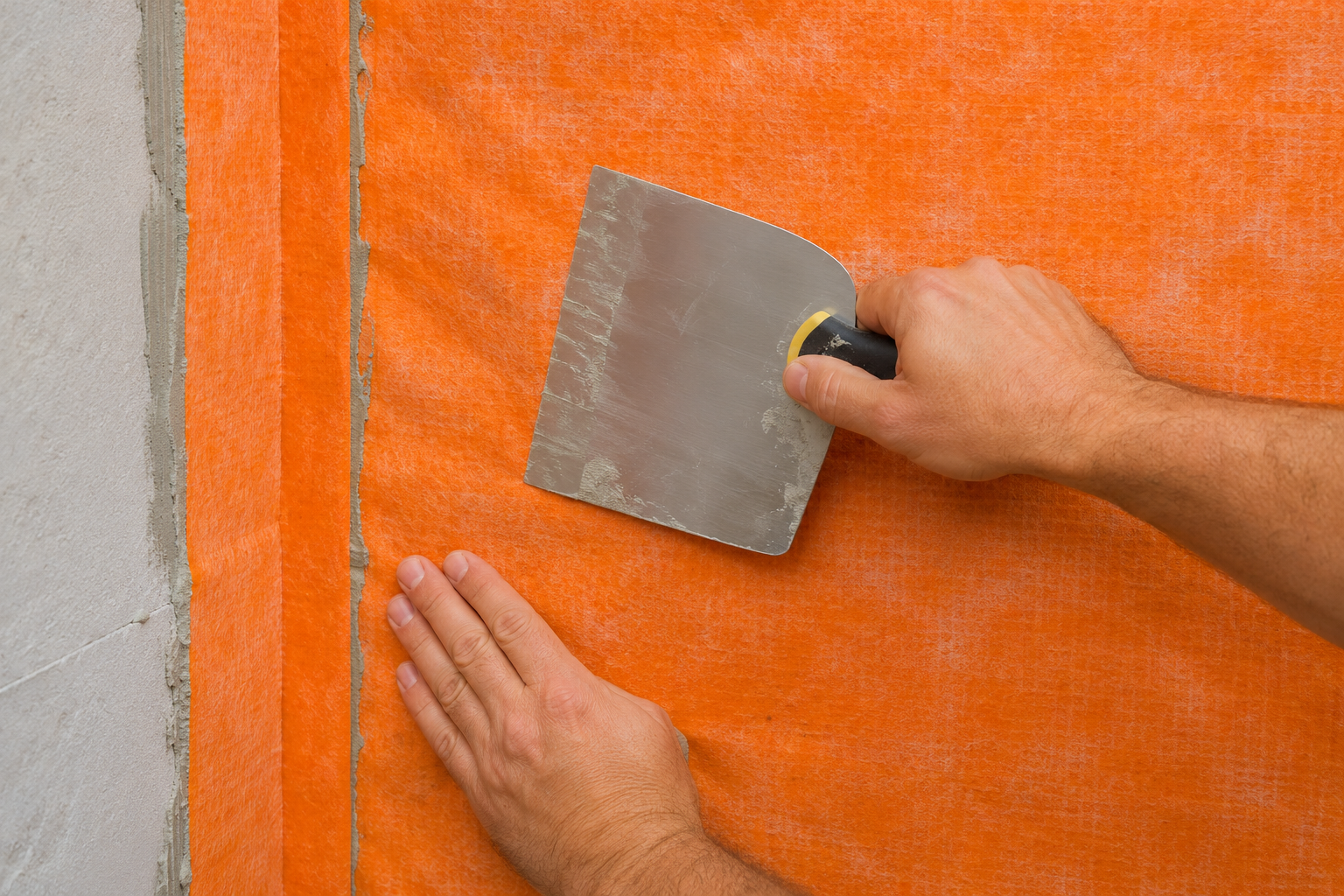
By Advanced Custom Renovations · Homeowner Resource Library · Image above: illustrative example.
The useful starting point
Tile and grout are the finish surface. A properly planned shower assembly must also manage water through its base, drain connection, waterproofing, transitions, and installation details.
Think about the complete assembly
A tile shower is a group of materials and connections working together. The visible tile is one layer. The backing, waterproofing approach, shower base, and drain connection are part of the construction behind the finished room.
Tile and grout should not be treated as the shower’s waterproofing system. Manufacturer guidance from Schluter explains the importance of managing moisture beneath the tile covering. The particular system used on a project must be suitable for its conditions and installed to its requirements.
The base and drain need to work together
The shower floor must be built to direct water appropriately, with a drain connection compatible with the assembly. The details depend on the method and products specified for the job.
A centered drain, linear drain, curb, or curbless entry is more than a visual selection. It affects planning and must be considered with the existing structure, layout, and intended use. Share those preferences before the scope is settled.
Corners and openings deserve attention
Walls meet floors. Niches introduce corners. Benches and curbs add surfaces and transitions. Plumbing creates openings. Each is part of the waterproofing plan.
Products that work together within a manufacturer’s specified assembly should be used according to the applicable instructions. A component’s name or color alone does not establish how the whole shower was constructed.
Water-resistant is not the same as a completed waterproof assembly
Some backing materials can tolerate moisture without serving as a finished waterproofing system on their own. The role of each layer must be understood as part of the selected method.
Grout sealer is also different from waterproofing. It may support stain protection where appropriate for the grout, but it does not replace the water-management construction beneath the finish.
Ask about the plan before installation
Which shower construction and waterproofing method is included?
How will the base, drain, walls, and transitions work together?
How are the planned niche, bench, curb, or curbless entry addressed?
Which product instructions and applicable checks govern the installation?
What information about the assembly will be available for my project records?
Use construction photos as context
Progress photographs can help explain what happened before tile installation. A photograph alone cannot verify every connection, hidden detail, test, or requirement. Ask the team to explain the assembly and the project’s documentation.
Good planning continues into everyday care
The finished shower still needs regular cleaning and attention to its joints and sealants. Report persistent leaks, damaged joints, or loose tile promptly. Those conditions call for evaluation, not a coat of sealer.
Explore ACR bathroom remodeling, accessible bathroom options, and our tile and grout care guide.
General homeowner guidance. Your written project scope and the instructions for your exact installed products take priority. Confirm project-specific arrangements with the ACR team.
Further reading: Schluter: shower assemblies and moisture management
More from the ACR Library
Tile Edging and Trim →
Shower Glass Options and Care →
Who Buys Remodel Finish Materials →
← Browse the full Resource Library
