
← Back to the Homeowner Resource Library
After the remodel · Homeowner care
How to Care for Tile and Grout After Your Remodel
Your tile was chosen to be lived with. Consistent cleaning and a little attention to the joints help keep the finished space looking its best.
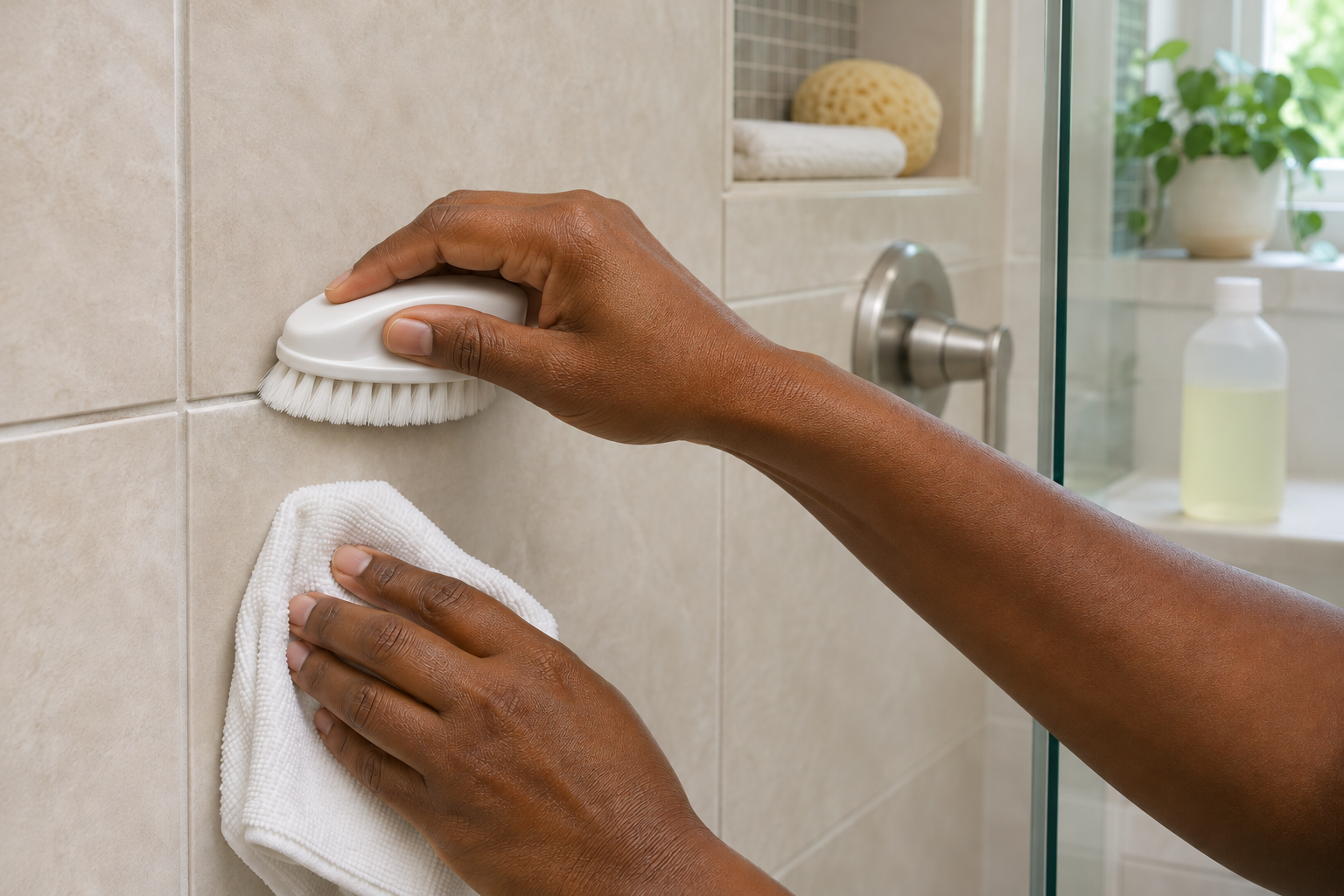
By Advanced Custom Renovations · Homeowner Resource Library · Image above: illustrative example.
The everyday essentials
Use a cleaner approved for your tile and grout, rinse away residue, and help wet areas dry between uses. Check the exact grout before sealing: some products do not require it.
Start with the products in your home
Tile, grout, and the flexible sealant at corners are different materials. Their care requirements can differ, too. Keep the product names and care instructions with your remodel paperwork, especially if you have natural stone or a specialty finish.
Before using a newly grouted shower, follow the installer’s confirmed return-to-service instructions for the complete installation. ACR’s general care sheet calls for at least 72 hours, with any longer product or installer wait taking priority. Ask before using the shower if the timing is unclear.
Build a gentle, consistent cleaning routine
Use warm water and a pH-neutral cleaner approved for both your tile and grout. Work with a soft sponge, microfiber cloth, or suitable soft brush; use a soft mop on tile floors. Follow the cleaner’s directions, rinse away residue, and dry as needed.
After showering, squeegee tile and glass to reduce water spots and soap film. Run the exhaust fan during and after use, allow surfaces to dry, and clean shower floors and drains regularly. Wipe spills promptly rather than letting them settle into the joints.
Why is one area of grout turning brown?
A color change alone does not identify the cause. Dirt, soap or cleaner buildup, and staining are possible explanations. A frequently wet area may also need a closer look at how it dries and whether moisture is recurring.
Start with an approved cleaner and a gentle cleaning method. Rinse thoroughly and allow the area to dry before comparing its color. Do not reach immediately for an acid cleaner or cover the discoloration with sealer.
If the color remains, returns quickly, or comes with cracked grout, loose tile, deteriorated sealant, or persistent moisture, contact ACR about an installation we completed. Clear photos and a note about when it appears are helpful. A photo of brown grout alone cannot tell us whether the area needs cleaning, different care, or an inspection.
Does grout need to be sealed?
The answer depends on the grout. Sealing is not a universal maintenance step, and there is no single resealing schedule for every installation.
MAPEI Ultracolor Plus FA: This cement-based grout has built-in stain resistance and does not typically require sealing. A compatible penetrating sealer may be used according to current manufacturer instructions.
MAPEI Flexcolor CQ: This ready-to-use grout has built-in stain resistance and does not require sealer. Use compatible maintenance products.
Other grout or natural stone: Check the exact material’s requirements. A stone surface may need care that differs from the grout beside it.
If sealing or resealing is appropriate, the surface must first be properly cleaned, prepared, and dried as the sealer manufacturer directs. Confirm compatibility and return-to-use timing before applying anything.
Stain resistance still needs cleaning
Regular cleaning, drying wet areas, and maintaining sealants are part of the ongoing care of your remodeled space. A compatible sealer, where appropriate, can support stain protection. Grout and grout sealers do not replace the waterproofing system beneath a shower.
Skip aggressive shortcuts
Avoid vinegar and acidic cleaners for routine use, particularly around natural stone and cement-based grout. Skip harsh bleach or ammonia cleaners, abrasive powders, steel wool, and wire brushes. Use steam equipment only when explicitly approved for the installed materials. Never mix cleaning products.
Look at the joints, not just the tile
Periodically check corners, tub edges, shower pans, and transitions for deteriorating silicone or sealant. Report loose tiles, cracked grout, damaged joints, or persistent leaks promptly. Do not keep using a shower with a suspected leak while waiting for a cleaner to solve it.
If you are unsure what you are seeing, contact ACR. We can discuss the change and the appropriate next step. Your project’s written warranty documents govern coverage; a general care article cannot determine the cause of an individual condition.
Choosing finishes for a new project?
Maintenance deserves a place beside color and style. Explore ACR’s grout information, tile flooring installation, and bathroom remodeling as you plan a space that works for your daily routine.
General homeowner guidance adapted from ACR’s care guides. The current instructions for your exact installed products and your installer’s project-specific directions take priority.
Manufacturer resources: MAPEI: Ultracolor Plus FA sealing · MAPEI: Flexcolor CQ product guidance
More care resources
LVP flooring care →
Laminate flooring care →
← Browse the full Resource Library
