
← Back to the Homeowner Resource Library
After the remodel · Homeowner care
How to Care for LVP Flooring After Installation
Your new floor is ready for everyday life. A few good habits will help it keep looking that way.
By Advanced Custom Renovations · Homeowner Resource Library
The everyday essentials
Remove grit regularly, clean with a lightly damp microfiber mop and an approved cleaner, and wipe up spills promptly. Your exact flooring product’s instructions come first.
Start with a simple cleaning routine
Arizona dust has a way of making itself at home. Sweep or dust-mop regularly so sand and grit do not get pushed across your floor. If you vacuum, use the hard-floor setting with the rotating beater bar turned off.
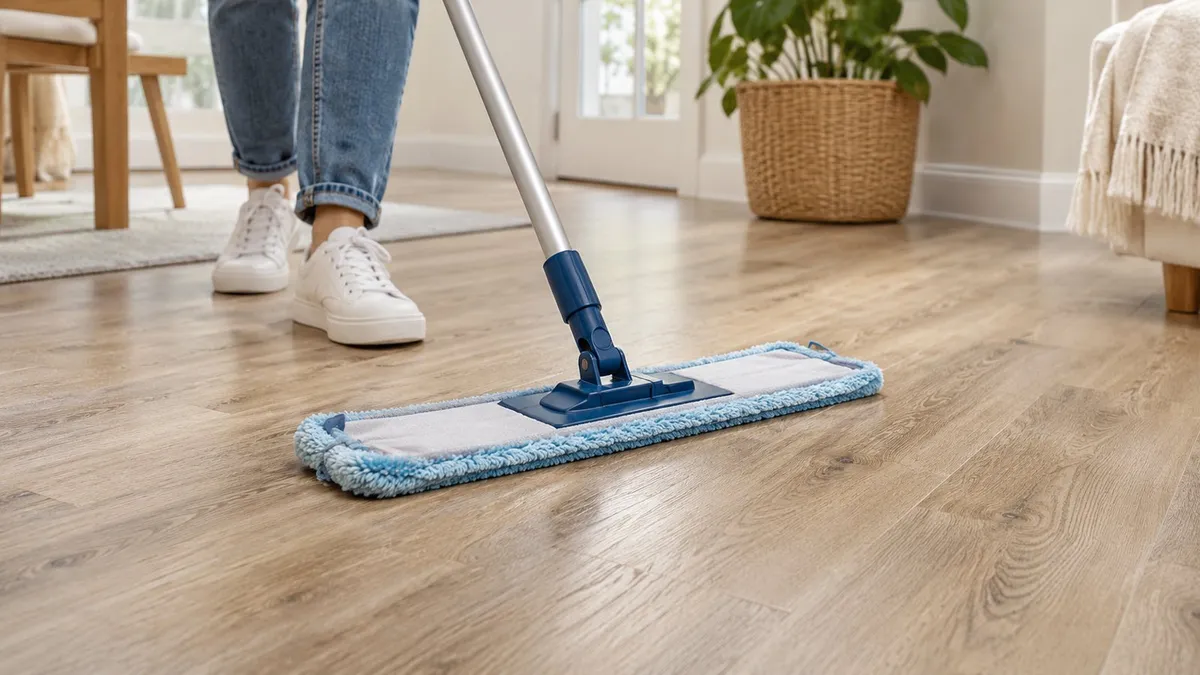
For routine cleaning, use a lightly damp microfiber mop and a manufacturer-approved, pH-neutral cleaner. Follow the dilution directions and avoid leaving puddles. More cleaner does not necessarily mean a cleaner floor; residue can leave it looking dull.
Give a new installation the time it needs
Before moving heavy furniture, laying rugs, or damp-cleaning for the first time, follow the instructions provided for your installation. Glue-down LVP may need additional adhesive curing time. Keep your product name, care sheet, and purchase information together so you can check the right guidance later.
Waterproof planks still need prompt spill cleanup
Many LVP products are described as waterproof. That does not mean the entire floor assembly, its edges, or the room beneath it can be left wet. Water may reach the subfloor or adhesive around edges and seams.
Blot spills promptly, dry the surface, and pay attention around sinks, exterior doors, appliances, and pet bowls. A recurring wet spot deserves a check for the source of the moisture. Fixing a leak matters more than repeatedly mopping it up.
Protect the finish from everyday wear
Use clean felt pads under furniture legs and replace worn pads.
Lift furniture instead of dragging it. Plan protection before moving heavy items or appliances.
Use mats at exterior doors. Avoid rubber- or latex-backed mats unless the flooring manufacturer approves them.
Keep pet nails trimmed and use a suitable protective mat under rolling chairs.
Follow your product’s indoor climate guidelines and limit prolonged direct sunlight and excessive heat.
Check before trying a stronger cleaning method
Skip steam cleaning, soaking, abrasive pads, wax, oil soaps, and “mop-and-shine” products unless your exact floor’s instructions approve them. Do not improvise with bleach, ammonia, vinegar, or solvents. A cleaner recommended for a different surface may be unsuitable for your planks.
For a stubborn mark, blot with a soft cloth and use the manufacturer’s stain-removal guidance. Check before applying a repair kit or any coating.
What deserves a closer look?
Routine dirt and spills are part of caring for a lived-in floor. Lifted edges, new gaps, recurring moisture, or damaged planks deserve a closer look. Take clear photos, note when the change appeared, and contact ACR about work we installed. Avoid covering the area with a coating or attempting a repair before the issue is understood.
A little upkeep goes a long way
Regular cleaning, furniture protection, and prompt attention to spills are the ongoing care that helps a finished floor perform well. If you are unsure whether something needs cleaning or inspection, ask. You do not need to diagnose it yourself.
Planning a floor you will enjoy living with?
Care requirements belong in the selection conversation, alongside color and plank size. Explore ACR’s LVP flooring installation or our broader flooring services as you plan your project.
General homeowner guidance adapted from ACR’s care guides. The current instructions for your exact installed products and your installer’s project-specific directions take priority.
Manufacturer resources: Shaw Floors: vinyl care and maintenance
More care resources
Laminate flooring care →
Tile and grout care →
← Browse the full Resource Library
